

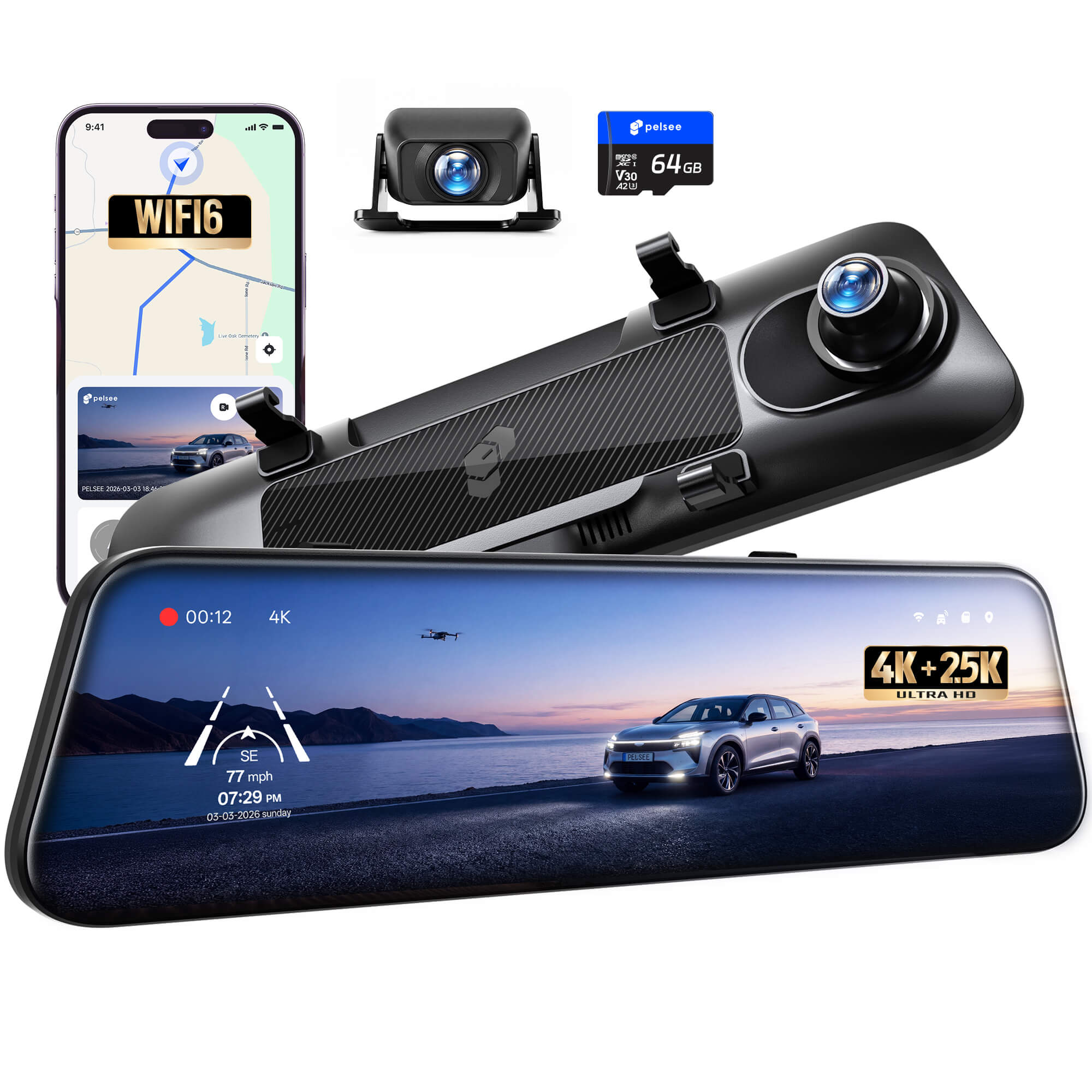

Get Extra Storage for Free

Seamless Wireless Connection

Enhanced clarity in low light
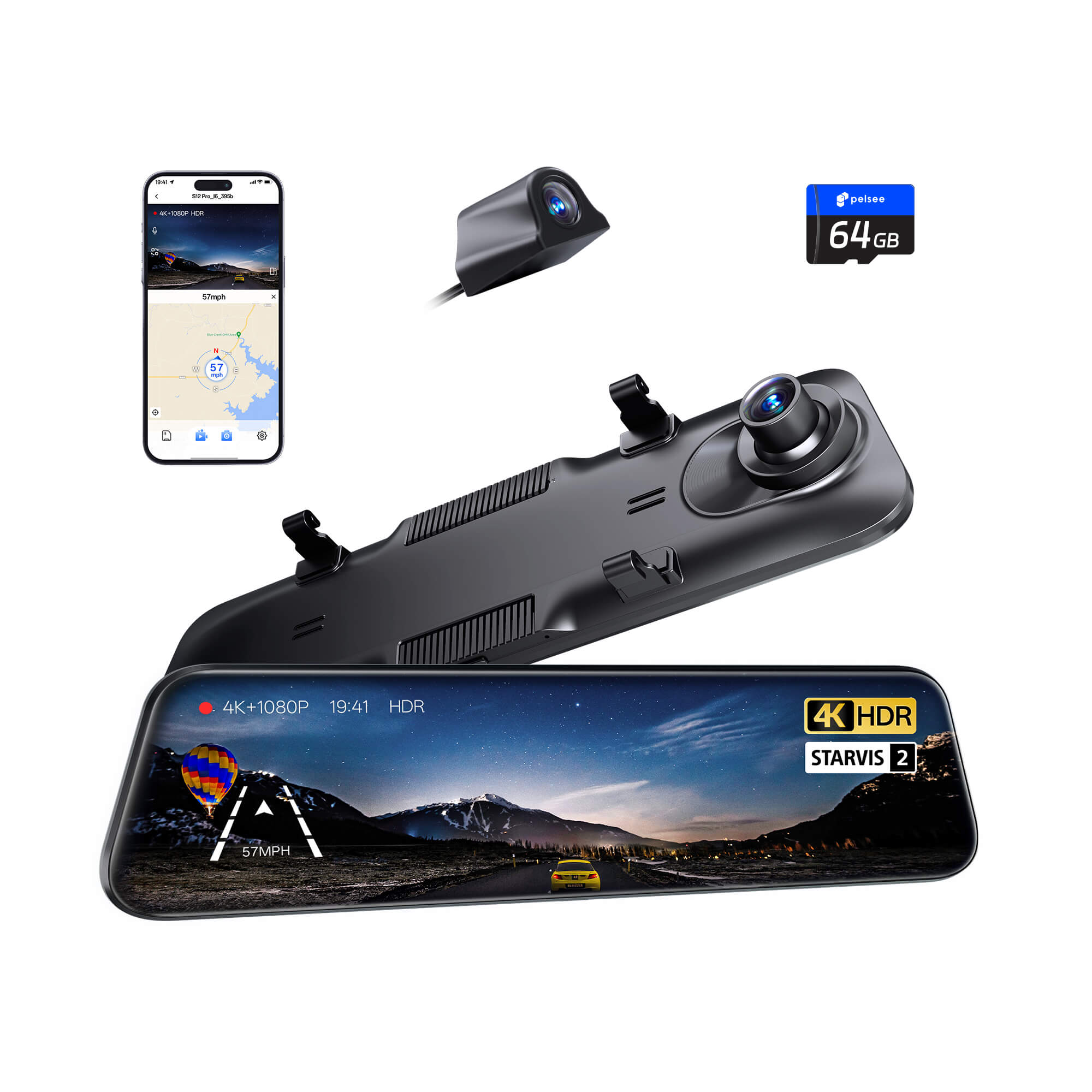
Seamless Wireless Connection

Ensure uninterrupted recording

Works with Pelsee Dash Cams

Track your journey with GPS
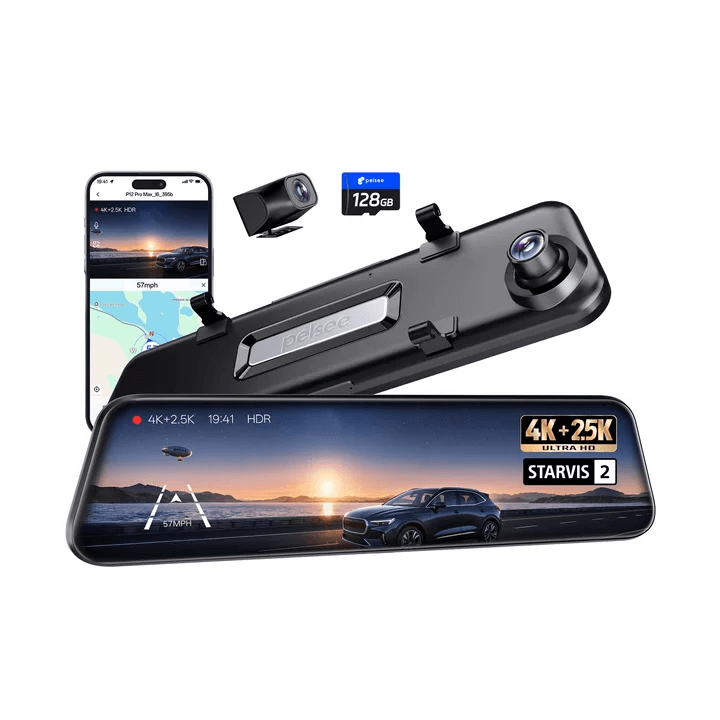

Clear views, front and rear

Smart alerts for safer driving
Track your journey with GPS

Control with voice commands
Compare Pelsee Mirror Dash Cams
Native 4K + 2.5K
True 4K + 2.5K
4K front + 1080P rear recording
8MP sensor, telephoto lens, Wi-Fi 6, Starlit night vision
STARVIS 2 IMX678, ADAS, BSD, GPS
STARVIS 2, Wi-Fi, GPS, parking monitoring
Long-distance detail and newer-generation Native 4K
Premium imaging + driver-assistance features
Everyday mirror dash cam use
What Is a Mirror Dash Cam?
Everything You Need to Know Before Buying Your First Mirror Dash Cam
A mirror dash cam, also called a rear view mirror dash cam, combines a front-facing dash camera with a digital mirror display and a separate rear camera. It installs over or in place of the existing rearview mirror, allowing drivers to record the road ahead while viewing a live rear-camera feed on the mirror screen. Unlike a traditional dash cam that adds another display to the windshield, a mirror dash cam integrates the screen into a location drivers already use naturally. This makes it especially useful for drivers who want both front and rear recording without adding more visual clutter to the dashboard.
Front and Rear Recording in One System — A front and rear mirror dash cam records multiple perspectives of an incident. The front camera captures traffic, road signs, lane position and vehicles ahead, while the rear camera records activity behind the vehicle. Having both views can provide more context when reviewing collisions, parking incidents or unexpected road events.
A Wider Digital Rear View — The rear camera can provide a wide live view behind the vehicle on the mirror display. This can be especially useful when passengers, headrests, cargo or vehicle design reduce visibility through a conventional rearview mirror. A mirror dash cam should still be used as a driving aid rather than a replacement for safe mirror checks and direct observation.
A Cleaner Interior Setup — Because the display is integrated into the rearview mirror area, a mirror dash cam can feel less intrusive than adding a separate screen to the windshield. Once the front camera, rear camera and power cables are properly routed, the system can provide a relatively clean installation while keeping recording controls within easy reach.
Native 4K Recording — Not every video file labeled “4K” contains the same level of captured detail. Some cameras create a 4K-sized file by digitally upscaling footage from a lower-resolution image sensor. A native 4K mirror dash cam captures 3840 × 2160 video directly from a sensor capable of recording the required image detail. This can preserve more useful information when reviewing road signs, vehicle movement or license plates. Resolution alone does not guarantee a readable license plate in every situation. Vehicle speed, lighting, distance, shutter behavior, lens quality and image processing all affect the final result.
Rear Camera Resolution Matters Too — A mirror dash cam depends heavily on its rear camera because the rear video may also serve as the live digital mirror view. When comparing systems, look beyond the front-camera resolution and consider rear-camera resolution, lens design and low-light performance as well. Higher rear-camera detail can make the system more useful for reviewing vehicles approaching from behind, parking incidents and highway driving.
Night Vision Is More Than Brightness — Good night video is not simply footage that looks brighter. A useful night-vision system needs to balance dark areas with bright headlights, streetlights and reflective license plates. Image sensor quality, HDR or WDR processing, lens aperture and image tuning all influence how much usable detail remains in difficult lighting.
Parking Monitoring — Many mirror dash cams support parking monitoring when connected to a compatible hardwire or continuous-power solution. Depending on the model, parking features may include impact-triggered recording or time-lapse recording. Always follow the power-accessory requirements for your specific model and use low-voltage protection where required to reduce the risk of excessive vehicle-battery discharge.
Wi-Fi, GPS and App Access — Wi-Fi makes it easier to preview, download and manage important footage without repeatedly removing the memory card. GPS can add location, route or speed information that provides additional context when reviewing a recording. These convenience features do not directly improve video resolution, but they can make the footage significantly easier to retrieve and use when it matters.